CHAITANYA

Build log

Projects

A running record of things built, from a competition UGV down to a Raspberry Pi clinometer.

Featured builds

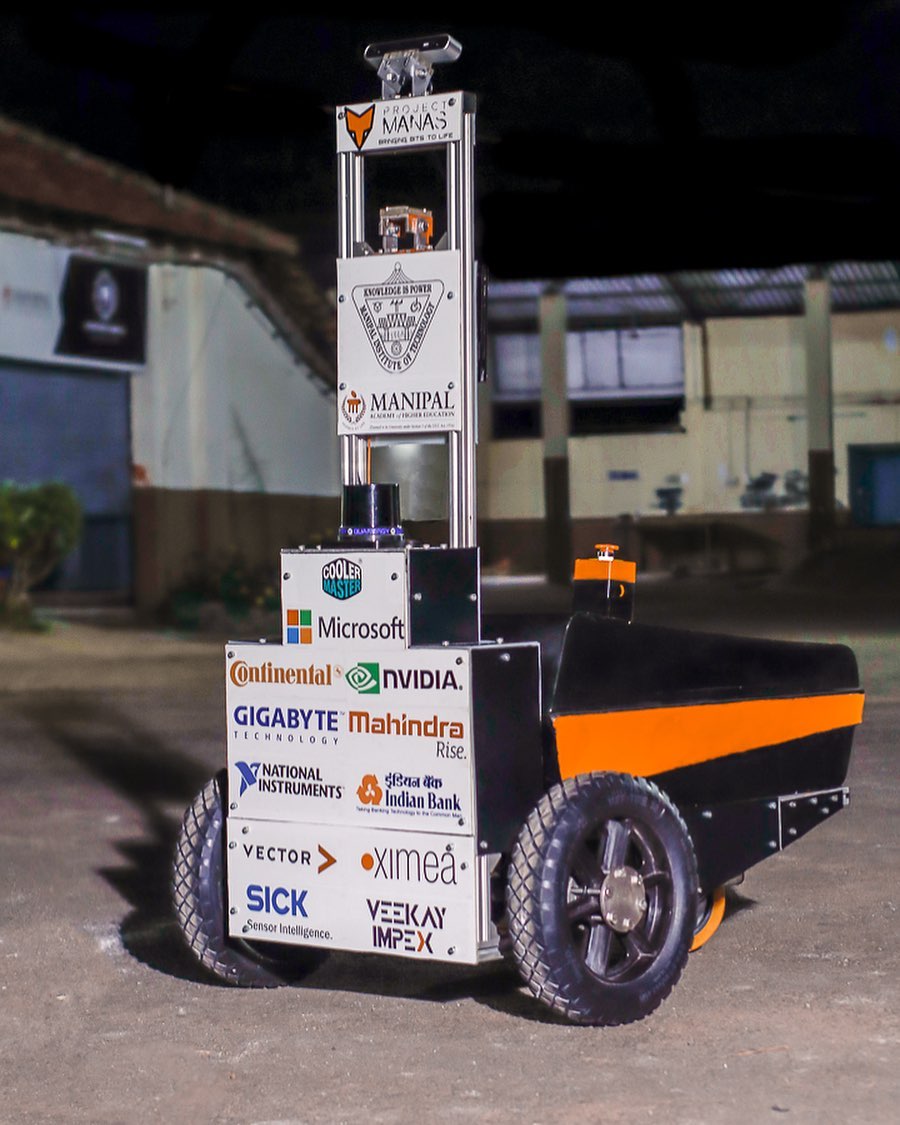
Solo, an autonomous ground vehicle, navigating an obstacle course

An autonomous unmanned ground vehicle built with Project Manas for the Intelligent Ground Vehicle Competition (IGVC) at Oakland University. Helped win IGVC 2019 and several other awards.
Esc to close
Solo, an autonomous ground vehicle, navigating an obstacle course

Solo

An autonomous unmanned ground vehicle built with Project Manas for the Intelligent Ground Vehicle Competition (IGVC) at Oakland University. Helped win IGVC 2019 and several other awards.

Solo is an autonomous unmanned ground vehicle built by Project Manas, the student robotics team at Manipal, for the Intelligent Ground Vehicle Competition — an annual event at Oakland University, Michigan, where teams put fully autonomous vehicles through an outdoor obstacle course: lane following, obstacle avoidance and waypoint navigation, with no driver and no remote control.

My work was on perception and navigation: turning raw camera and LiDAR output into a usable picture of the course, and that picture into a route the vehicle could actually take.

Project Manas took first place with Solo at IGVC 2019, along with several other awards that year.

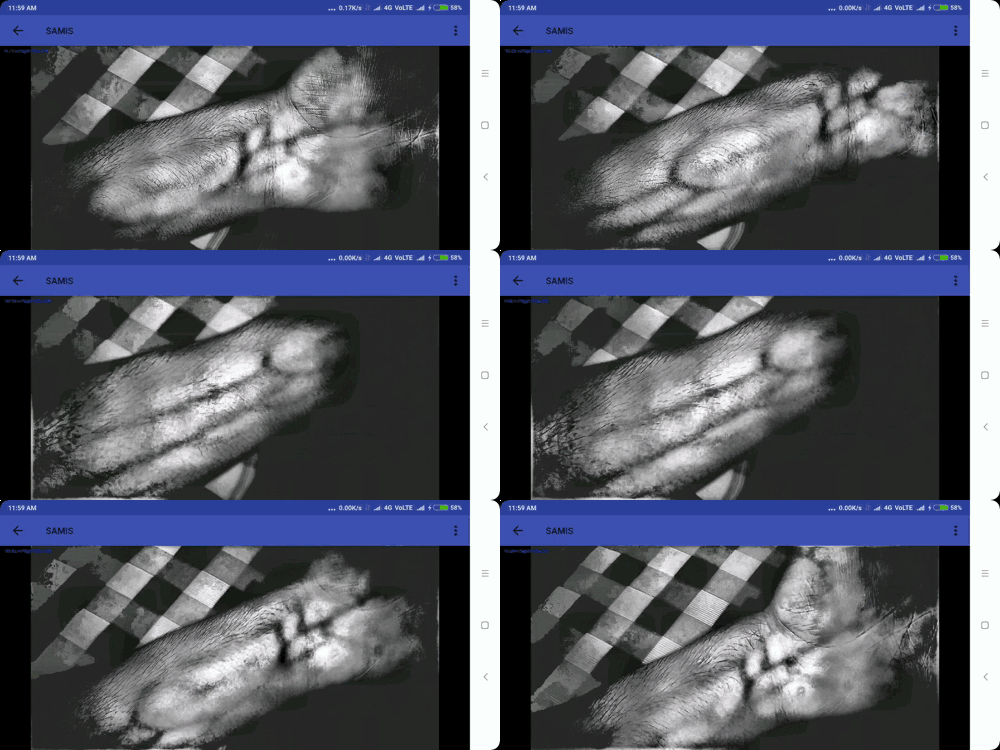
Real-time vein visualization output from SAMIS

A smartphone-based vein-imaging system that uses visible-spectrum image processing to visualize subcutaneous veins without IR hardware, aimed at making IV access easier for nurses. Won Second Place Grand Award in Biomedical Engineering at Intel ISEF 2017 and the Grand Award at IRIS 2016.
Esc to close
Real-time vein visualization output from SAMIS

SAMIS

A smartphone-based vein-imaging system that uses visible-spectrum image processing to visualize subcutaneous veins without IR hardware, aimed at making IV access easier for nurses. Won Second Place Grand Award in Biomedical Engineering at Intel ISEF 2017 and the Grand Award at IRIS 2016.

SAMIS is an Android app that uses image processing algorithms to visualize subcutaneous veins in an image of the body of a user taken using a regular smartphone camera. SAMIS utilizes the fact that different wavelengths of light interact in different ways with biological tissue to extract vein information.

It is particularly challenging to do on a regular, unmodified smartphone camera because the range of wavelengths of light a smartphone can capture excludes the infrared spectrum, where vein details are simpler to extract. Since IR data is unavailable, SAMIS uses the more subtle variations detectable in the visible spectrum to help visualize vein patterns.

SAMIS can potentially be used to help nurses make the process of finding veins for administering intravenous injections less error-prone. This is useful for individuals whose veins are hard to find using conventional methods, and it is potentially useful for diagnosing conditions like varicose veins. Systems like SAMIS, developed on off-the-shelf, easily accessible hardware, can bring down the cost of medical diagnostics and give doctors and clinics in less affluent regions access to useful tools.

Geeve George and I built SAMIS together. It won the Grand Award at IRIS 2016 in Pune, and the following year the Second Place Grand Award in Biomedical Engineering at the Intel International Science and Engineering Fair (ISEF) in Los Angeles.

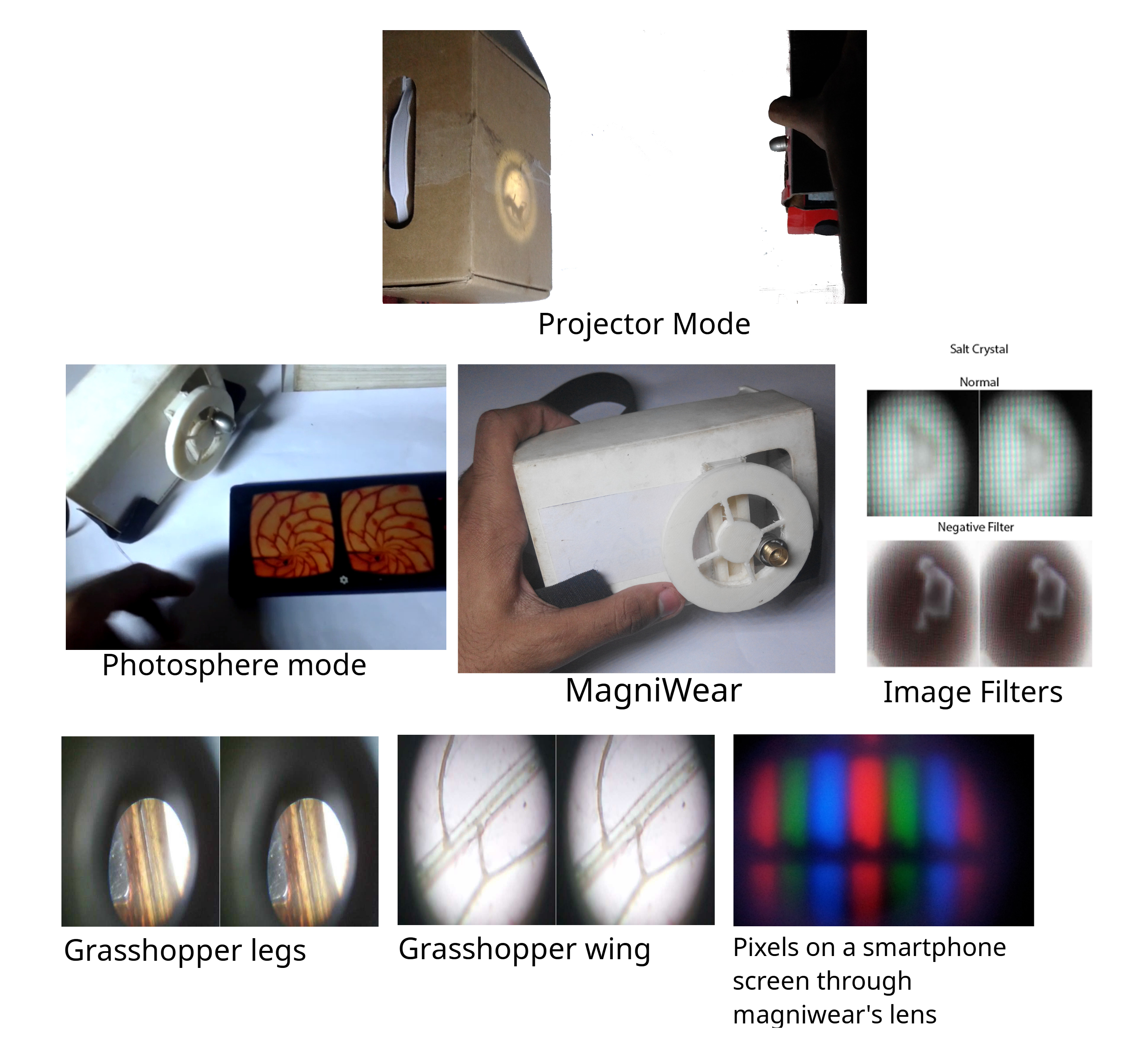
Magniwear AR/VR microscope headset

An AR/VR microscope on the Google Cardboard platform, operated hands-free by voice while exploring biological samples, doubling as a dental loupe and a live-streaming tool for remote guidance. Selected top 90 globally, Google Science Fair 2015.
Esc to close
Magniwear AR/VR microscope headset

Magniwear

An AR/VR microscope on the Google Cardboard platform, operated hands-free by voice while exploring biological samples, doubling as a dental loupe and a live-streaming tool for remote guidance. Selected top 90 globally, Google Science Fair 2015.

Magniwear is an AR/VR microscope built on the Google Cardboard platform. It allows the user to operate a microscope hands-free using voice commands while wearing it on their head, and explore biological samples in a virtual reality environment. This makes Magniwear useful as an educational tool, letting children explore the microscopic world from a first-person view.

It can also function as a dental loupe, or as a tool for viewing small samples using the included lens system. Its AR features help the user highlight useful detail. It also allows streaming what the user sees to others over the internet, which makes Magniwear useful during operations and other tasks where experts can look at what the user is seeing and provide real-time guidance.

I worked on Magniwear with my friend Geeve George, and we were selected as one of the top 90 globally in the Google Science Fair 2015.

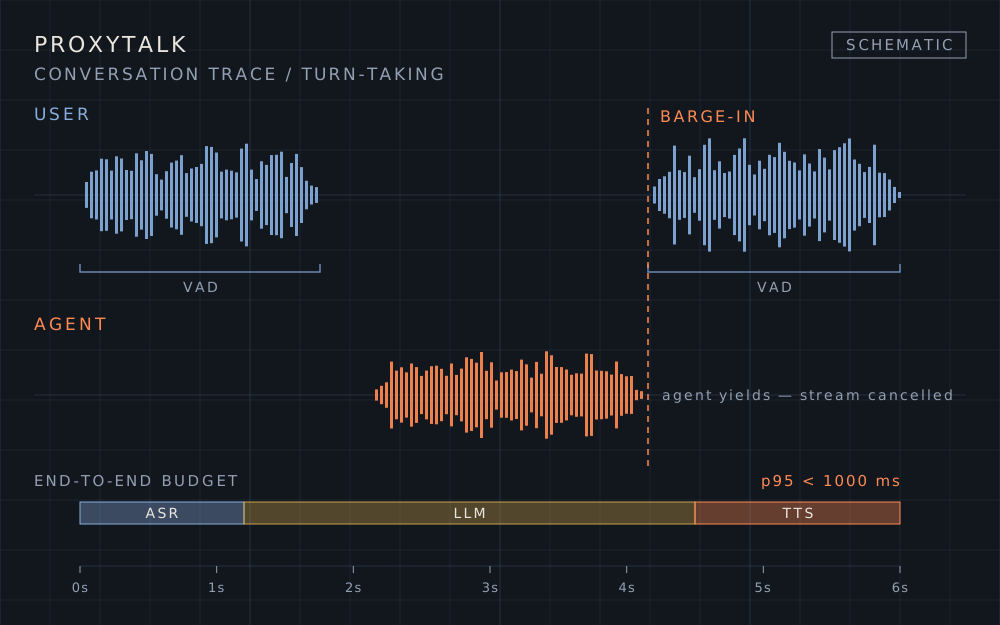
Illustrative conversation trace: user and agent speech envelopes, a barge-in where the agent yields, and an ASR/LLM/TTS latency budget

A real-time voice-agent platform: a streaming ASR → LLM → TTS pipeline over SIP/WebSocket with VAD, turn-taking, and barge-in, built on the OpenAI APIs. Sub-1,000ms p95 end-to-end latency.
Esc to close
Illustrative conversation trace: user and agent speech envelopes, a barge-in where the agent yields, and an ASR/LLM/TTS latency budget

ProxyTalk

A real-time voice-agent platform: a streaming ASR → LLM → TTS pipeline over SIP/WebSocket with VAD, turn-taking, and barge-in, built on the OpenAI APIs. Sub-1,000ms p95 end-to-end latency.

ProxyTalk is a real-time voice-agent platform. Audio arrives over SIP or a WebSocket and moves through a streaming pipeline — speech recognition, then an LLM, then speech synthesis — with voice activity detection, turn-taking and barge-in handling wrapped around it so a caller can interrupt mid-sentence and the agent yields immediately.

The hard part of a system like this is not any single stage, it is the latency budget across all of them: every stage has to stream rather than wait for completion, and the end-to-end p95 has to stay under a second for the conversation to feel natural.

Software & tools

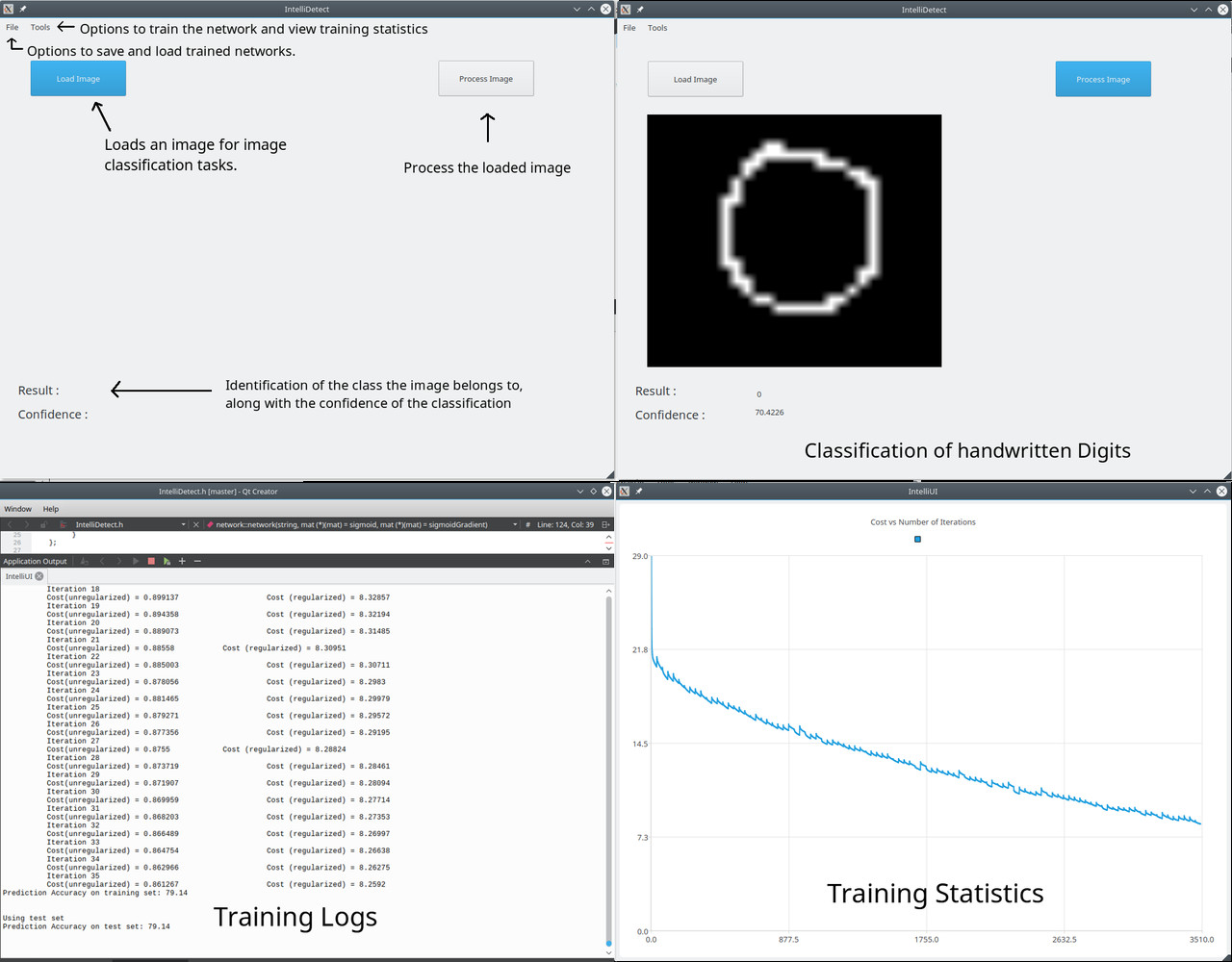
IntelliDetect GUI showing training statistics

A Qt/C++ GUI and neural-network library for training and deploying networks from a config file, with training statistics, visualizations, and inference built in.
Esc to close
IntelliDetect GUI showing training statistics

IntelliDetect

A Qt/C++ GUI and neural-network library for training and deploying networks from a config file, with training statistics, visualizations, and inference built in.

IntelliDetect is a GUI tool and a neural network library written in C++ using the Qt framework. It aims to help individual users train neural networks through the GUI, and load trained networks to perform inference on data points later.

IntelliDetect allows the user to specify the network architecture in a configuration file, load it using the GUI, and point to a dataset for training. It then takes care of creating, training and saving the trained network in a portable format, while providing a rich set of training statistics and visualizations to monitor training and evaluate performance.

The user can also load a pre-trained network and use it for prediction: click 'load', select the input from the filesystem, and click 'predict' to view the result within the GUI. I built IntelliDetect with the help of my friend Geeve.

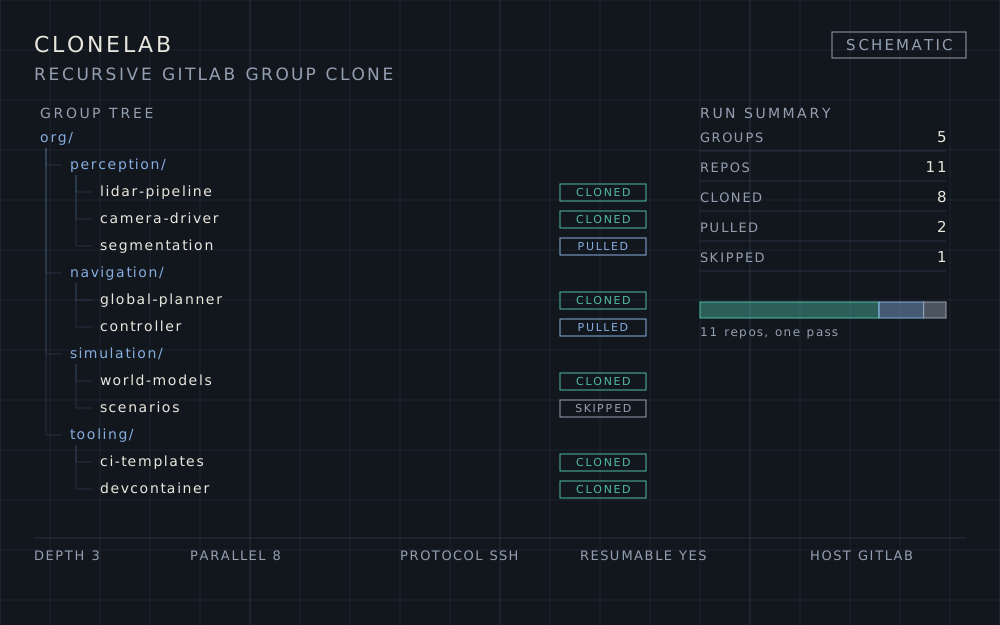
Illustrative group tree: nested GitLab groups expanded to repositories, each marked cloned, pulled or skipped, with a run summary

A CLI tool that clones and pulls updates for every repo in a GitLab group at once, since GitLab has no native way to do that.
Esc to close
Illustrative group tree: nested GitLab groups expanded to repositories, each marked cloned, pulled or skipped, with a run summary

CloneLab

A CLI tool that clones and pulls updates for every repo in a GitLab group at once, since GitLab has no native way to do that.

GitLab allows grouping repos into folder-like structures called groups. While groups are a great way to organize a large project with many modules, each maintained as a separate git repo, there is no easy way to clone the entire group a project resides in. CloneLab provides a way to do exactly that, and also supports pulling updates to all repos in a GitLab group at once.

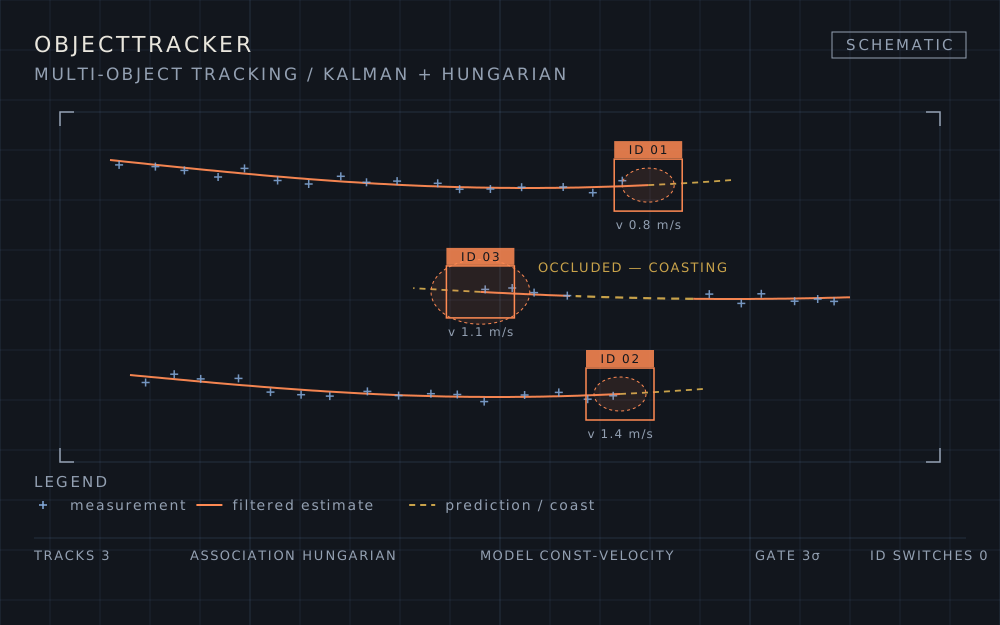
Illustrative tracking figure: noisy measurements, Kalman-filtered tracks with covariance gates, and one track coasting through an occlusion

A Kalman-filter based tracking module for pre-segmented objects in video, handling objects moving in and out of frame and tolerating positional noise.
Esc to close
Illustrative tracking figure: noisy measurements, Kalman-filtered tracks with covariance gates, and one track coasting through an occlusion

ObjectTracker

A Kalman-filter based tracking module for pre-segmented objects in video, handling objects moving in and out of frame and tolerating positional noise.

Given a video stream consisting of object masks as input, ObjectTracker tracks the movement of objects using Kalman filters. The module handles objects moving in and out of the view frame, and dynamically tracks the position and velocity of each object. It also copes with small amounts of random noise in object positions.

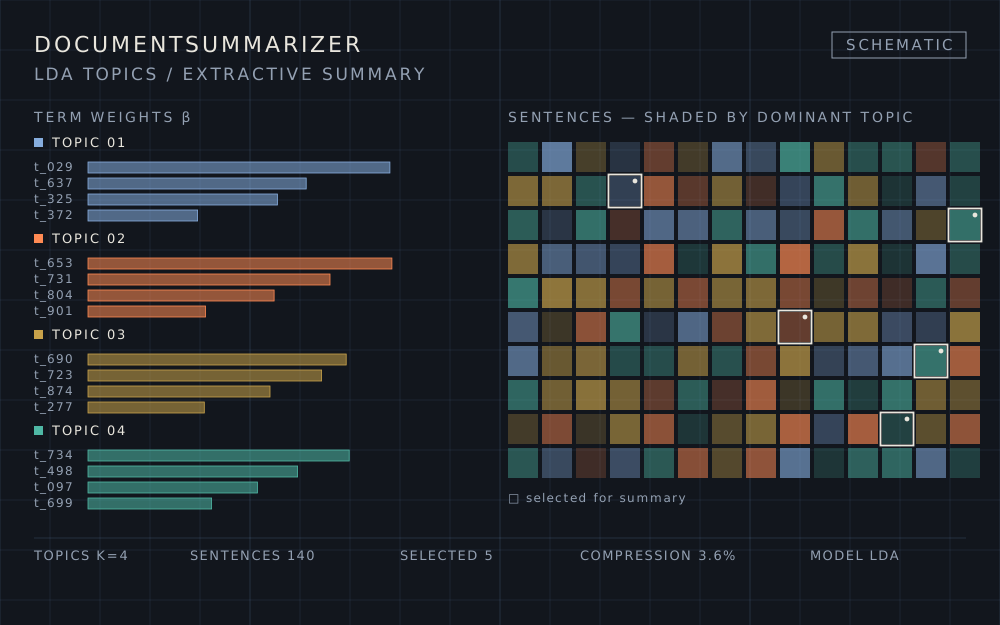
Illustrative topic-modelling figure: per-topic term weight bars beside a document of sentence blocks shaded by dominant topic, five selected as the summary

A reusable Python library for unsupervised topic modelling (LDA) combined with extractive summarisation.
Esc to close
Illustrative topic-modelling figure: per-topic term weight bars beside a document of sentence blocks shaded by dominant topic, five selected as the summary

DocumentSummarizer

A reusable Python library for unsupervised topic modelling (LDA) combined with extractive summarisation.

DocumentSummarizer is a Python library that combines unsupervised topic modelling with extractive summarisation. It fits an LDA topic model over a document, uses the resulting topic distribution to score how representative each sentence is, and selects a small set of sentences as the summary — so the output is drawn from the source text rather than generated.

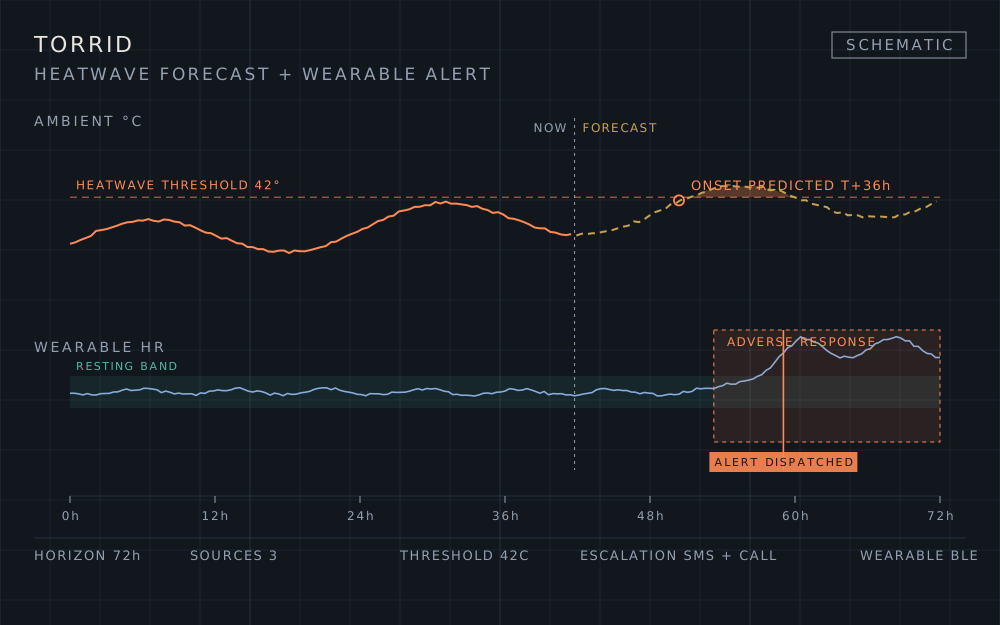
Illustrative forecast figure: ambient temperature crossing a heatwave threshold, with a wearable heart-rate lane showing an adverse response and an alert dispatch

Heatwave prediction and notification: tracks weather data to predict onset, and can detect an adverse response in the user's body via a wearable and call for help automatically.
Esc to close
Illustrative forecast figure: ambient temperature crossing a heatwave threshold, with a wearable heart-rate lane showing an adverse response and an alert dispatch

Torrid

Heatwave prediction and notification: tracks weather data to predict onset, and can detect an adverse response in the user's body via a wearable and call for help automatically.

Heatwaves are an underrated, invisible threat that can potentially kill thousands of unsuspecting people in a single day. Torrid predicts the onset of a heatwave before it happens by tracking weather data. During one, it can detect an adverse response in the user's body to the extreme heat using a wearable device, and automatically call for help if the user is in danger. I built Torrid with the help of my friends Dheeraj and Siddharth.

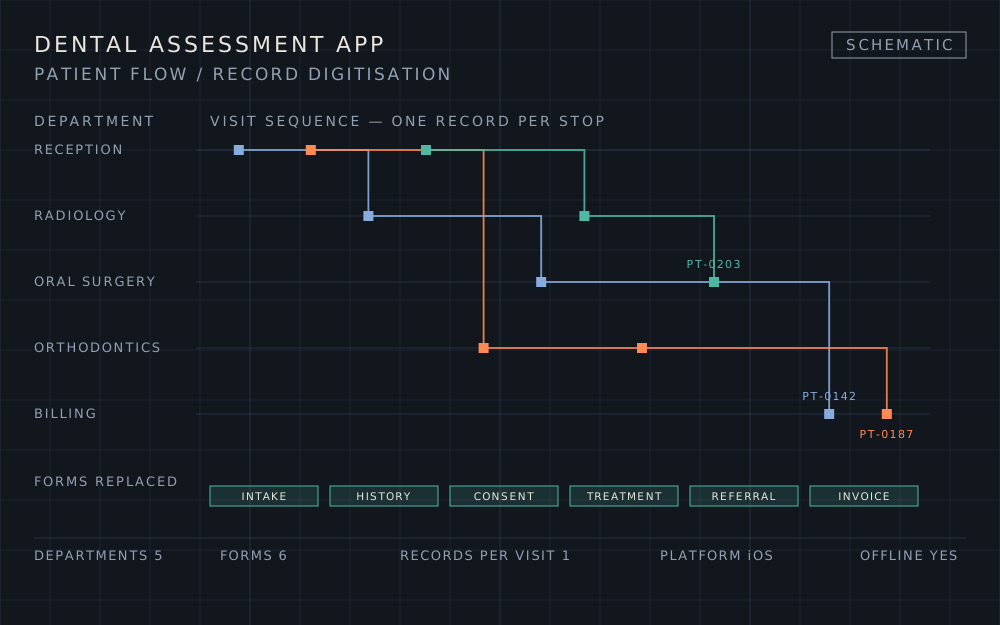
Illustrative patient-flow figure: anonymous patients moving through hospital department lanes over time, with the paper forms the app replaces listed underneath

An iOS app to digitize treatment history, appointments, and department visits for a local dental hospital, built as a final project for an iOS course.
Esc to close
Illustrative patient-flow figure: anonymous patients moving through hospital department lanes over time, with the paper forms the app replaces listed underneath

Dental Assessment App

An iOS app to digitize treatment history, appointments, and department visits for a local dental hospital, built as a final project for an iOS course.

Hospitals need to file a lot of paperwork and follow a set of procedures tracking the process of providing healthcare to a patient who visits. A local dental hospital had a need to streamline healthcare delivery by reducing the effort and paperwork involved in tracking treatment history, appointments and department visits of incoming patients.

As the final project for an iOS course at college, I designed and implemented an app for iOS to enable that process, with the help of my teammates Arsh and Deepansh.

Hardware

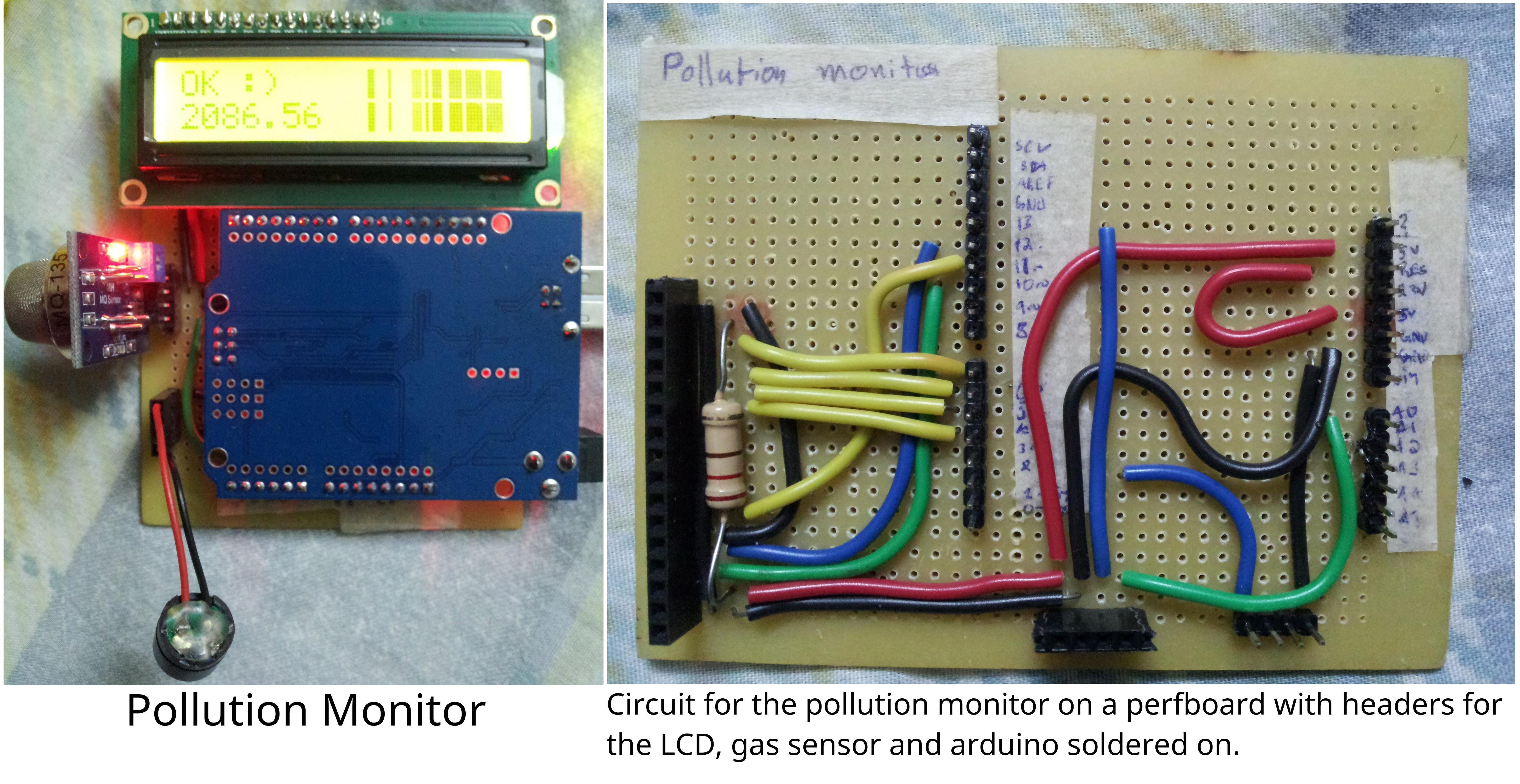
BreatheSafe indoor air quality monitor

A low-cost indoor air-quality monitor using an Arduino Uno and an MQ-35 sensor to track CO2 and VOC levels. Won a model-making competition at St. Aloysius College, Mangalore.
Esc to close
BreatheSafe indoor air quality monitor

BreatheSafe

A low-cost indoor air-quality monitor using an Arduino Uno and an MQ-35 sensor to track CO2 and VOC levels. Won a model-making competition at St. Aloysius College, Mangalore.

BreatheSafe is a low-cost indoor air-quality monitor that uses an Arduino Uno and an MQ-35 gas sensor to monitor the levels of CO2 and other VOCs in its vicinity. Monitoring indoor air quality can help identify problems with ventilation and help people breathe safer. This project won a model-making competition held at St. Aloysius College, Mangalore.

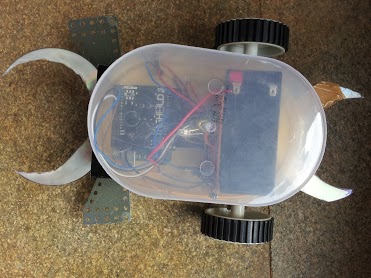
Robaldo soccer-playing robot

A Bluetooth-controlled soccer-playing bot built from scratch for the Robo Soccer Challenge at PESIT University against 68 teams — reached the quarterfinals.
Esc to close
Robaldo soccer-playing robot

Robaldo 2016 bot

A Bluetooth-controlled soccer-playing bot built from scratch for the Robo Soccer Challenge at PESIT University against 68 teams — reached the quarterfinals.

Robaldo was a Robo Soccer Challenge Match run by PESIT University, Bangalore, where we competed against 68 teams from all over India. Our bot was designed from scratch by my friend Geeve and myself.

The bot could be controlled wirelessly using a smartphone connected over Bluetooth to the Arduino Uno powering it. It could be driven in either direction — the forward and reverse directions could be flipped by pressing a button — which gave us a tactical advantage that let us reach the quarterfinals and hold our own against much sturdier bots.

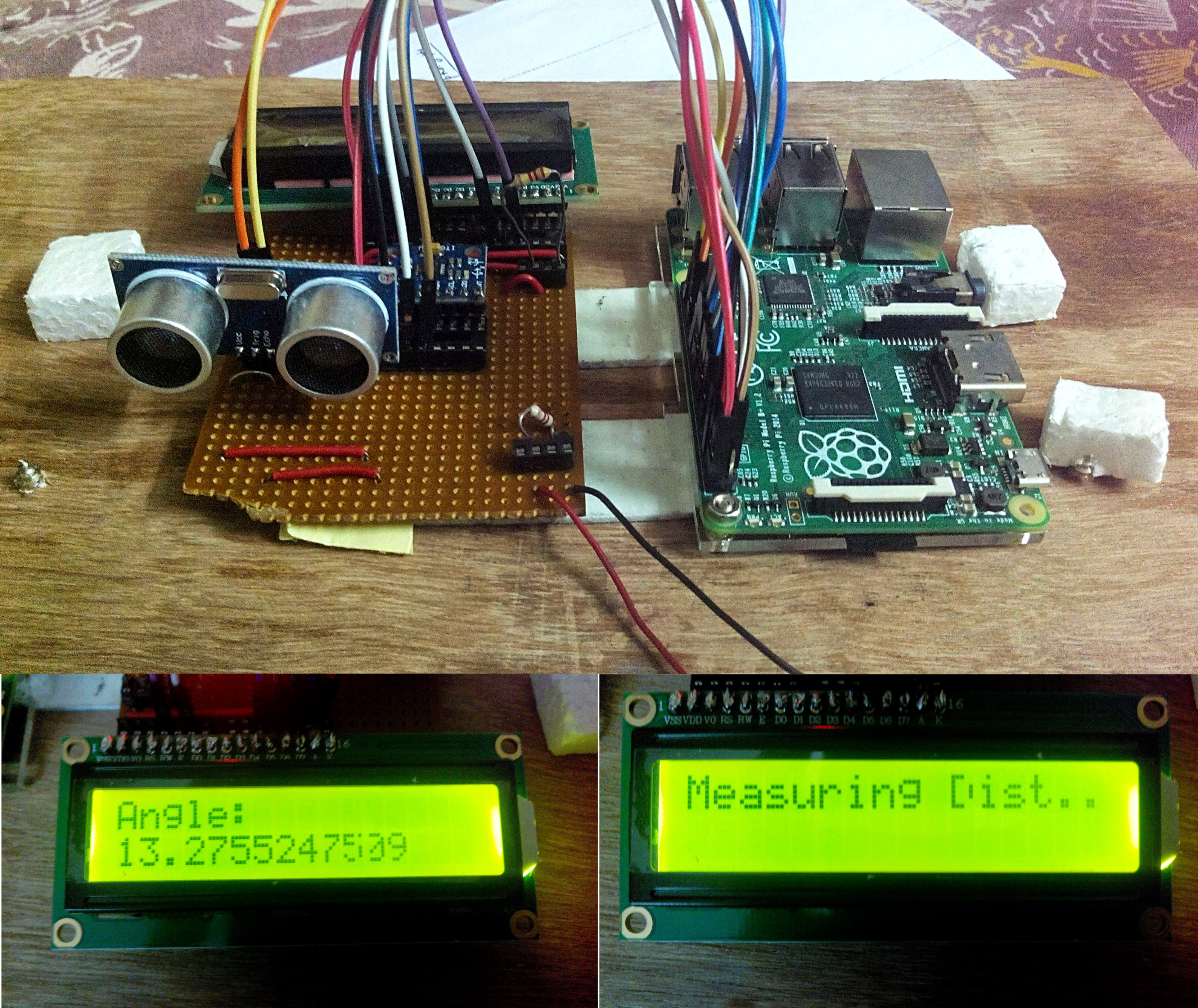
Digital clinometer device

A Raspberry Pi device that measures building heights using an ultrasonic sensor and an MPU-6050 accelerometer/gyroscope — the first project I ever built, in 10th grade.

Esc to close
Digital clinometer device

Digital Clinometer

A Raspberry Pi device that measures building heights using an ultrasonic sensor and an MPU-6050 accelerometer/gyroscope — the first project I ever built, in 10th grade.

A clinometer is a device that uses the principles of trigonometry to measure the height of buildings and other tall objects without having to climb them. The one I built uses a Raspberry Pi as the compute unit, an ultrasonic sensor to measure the distance to the object, and an MPU-6050 accelerometer and gyroscope breakout board to measure the angle of inclination to its top. The Pi then uses that to compute the height.

This was the first thing I ever built, back in the 10th grade. It set off everything that followed — an appetite for building things, and for learning whatever each build turns out to demand.